NOTICE  Our website is currently being updated. Missing any information? Please do not hesitate to contact us directly or via the contact form.NOTICE  Website update in progress.Contact us
fteu® Conduction Assemblies

Conduction Assemblies

Permeable metal combined with frames and contacts – conducting current, heat and fluids at the same time.

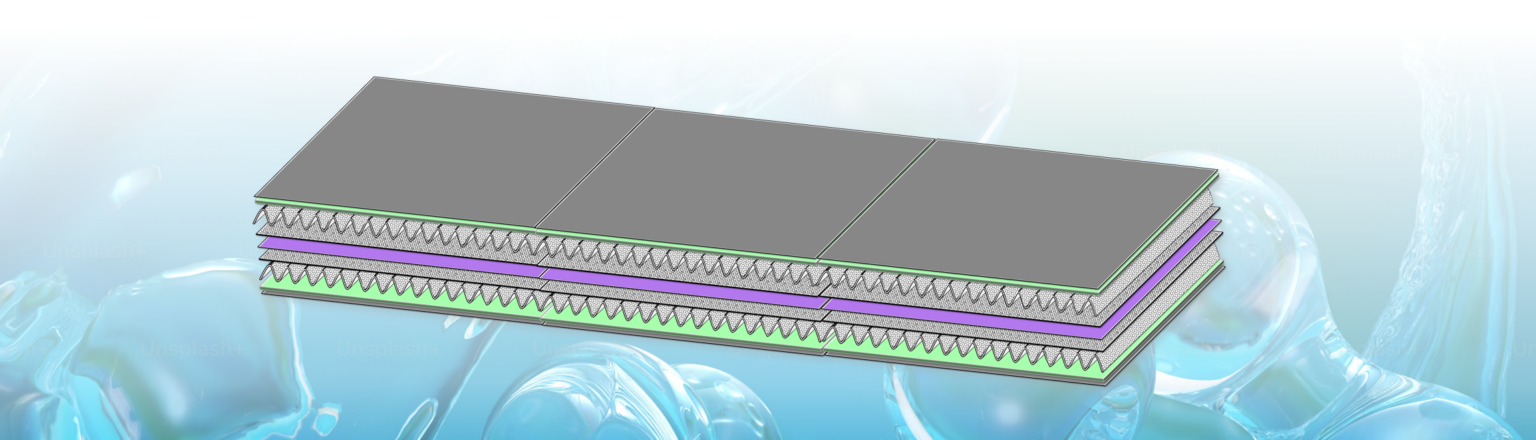
fteu® Conduction Assemblies combine permeable metal with frames, contacts and connections into assemblies that conduct electric current while fluids flow through them. As porous transport layers, current collectors and mesh electrodes they connect bipolar plates and membranes in electrolysers and fuel cells – with target conductivity, defined porosity and flexible geometry.

  • Target resistance and conductivity
  • Defined porosity for water and gas transport
  • Titanium, nickel, stainless steel and coatings
  • Flexible custom geometry with frames and contacts

Compatible with machines and systems from Siemens Energy · Cummins (Accelera) · Enapter · thyssenkrupp nucera · Wakefield Thermal · Radian*

Also known as conduction assembly · current collector · current distributor · current carrier · mesh electrode · electrode mesh · screen electrode · expanded metal electrode


Technical data

Conduction Assemblies at a glance.

Our standard range – other dimensions and structures on request.

MaterialsTitanium, nickel (e.g. 2.4060, 2.4066), stainless steel, Inconel, Hastelloy; coatings e.g. platinum or iridium
Filtration gradeDefined porosity and pore size for water and gas transport
DimensionsCell formats to drawing
Layers / structureSintered metal fibre felt, mesh laminates, knitted mesh, expanded metal
Edge / connectionWith frame, contact tabs or welded connections
Operating limitsElectrochemical stability; SOFC collectors up to approx. 600–900 °C

Permeable metal

Every fteu® product starts with the right permeable metal structure. Explore permeable metal →

Applications

Where Conduction Assemblies work.

Main industries, machines and the job the product does there – open an application for details.

EnergyHydrogen & ElectrolysisElectronics & Semiconductor
01Porous transport layers and current collectors in PEM and AEM electrolysersCompatible with Siemens Energy, Cummins (Accelera), Enapter*
Industries
Hydrogen & Electrolysis · Energy
Machines & equipment
PEM and AEM electrolysis stacks. Compatible with systems from Siemens Energy, Cummins (Accelera), Enapter*.
Role in the process
Conducts current between bipolar plate and membrane, feeds ultrapure water and removes oxygen and hydrogen.
Technical notes
Sintered titanium fibre felt or titanium mesh laminate, coated if required; defined porosity; low contact resistance.
02Nickel electrodes and elastic contact layers in alkaline electrolysersCompatible with thyssenkrupp nucera*
Industries
Hydrogen & Electrolysis · Chemical · Energy
Machines & equipment
Alkaline zero-gap cells, bipolar electrolysers. Compatible with systems from thyssenkrupp nucera*.
Role in the process
Conductive, permeable electrode or contact mat that compensates tolerances.
Technical notes
Nickel mesh or knitted mesh (e.g. 2.4060 / 2.4066); elastic recovery.
03Capillary and heat-conducting structures in heat pipesCompatible with Wakefield Thermal, Radian*
Industries
Energy · Industrial Machinery
Machines & equipment
Heat pipe coolers, vapour chambers, loop heat pipes, cryogenic heat exchangers. Compatible with systems from Wakefield Thermal, Radian*.
Role in the process
Mesh wick transports working fluid by capillary action and conducts heat.
Technical notes
Copper or stainless steel mesh; defined capillarity.
04Current collectors in fuel cells
Industries
Hydrogen & Electrolysis · Energy
Machines & equipment
Fuel cell stacks, repeat units.
Role in the process
Anode and cathode current collector of metal mesh or foam.
Technical notes
Nickel, copper or silver mesh; SOFC approx. 600–900 °C.
05Current carriers in electrochemical electrodes
Industries
Energy · Automotive
Machines & equipment
Electrochemical cells and batteries.
Role in the process
Metal mesh as current carrier with sintered-on active material.
Technical notes
Conductivity; adhesion of active material.
06EMC shielding and grounding
Industries
Electronics & Semiconductor · Automotive · Industrial Machinery
Machines & equipment
Electronics housings, control cabinets, shielded vents.
Role in the process
Formed knitted or woven mesh for shielding and grounding.
Technical notes
Knitted or woven wire mesh as conductive, elastic contact; e.g. Monel, tin-plated copper-clad steel; shielding effectiveness to specification.

* Brand names belong to their respective owners. We supply compatible products and are not affiliated with these manufacturers.

Configurations

Built for your system.

We build the structure your process needs – to drawing, sample or specification.

Sintered metal fibre transport layer

Titanium, nickel or stainless steel fibre felt, sintered.

3D mesh / multi-layer laminate

Titanium mesh with adjustable porosity.

Elastic contact mat

Nickel knitted mesh for zero-gap cells.

Mesh electrode assembly

Mesh or expanded metal with frame and contact.

FAQ

Questions about Conduction Assemblies.

Short answers to what customers ask us most.

What is a conduction assembly?

An assembly of permeable metal with frame and contacts that conducts electric current while water and gas flow through it – for example a porous transport layer in an electrolyser.

Which materials are used?

Titanium for PEM anodes, nickel for alkaline cells, stainless steel and coated variants depending on the electrochemical environment.

What does a porous transport layer do?

It conducts current between bipolar plate and membrane, feeds water to the membrane and removes the generated gas.

Can you make assemblies to our cell design?

Yes – geometry, porosity, layer structure, frame and contacts to your drawing.

Send us your drawing or sample.

We make your Conduction Assemblies to fit – from a single piece to series.

Request a quote